
Vicente Rico Ramírez
Optimization and Modeling Tools for Sustainability
vicente@iqcelaya.itc.mx +524616117575 x 5579
Member of the COMMANDERS Research Center
Process Systems Engineering at the Tecnológico Nacional de México en Celaya

Dr. Vicente Rico Ramírez
Professor of the Department of Chemical Engineering at the Tecnologico Nacional de Mexico en Celaya. Recognition by PRODEP. Member of the National System of Researchers (SNII III)
Education
Degree: Ph.D. Year: 1998
Institution and Location: Carnegie Mellon University, Pittsburgh, PA, USA
Major Discipline: Chemical Engineering
Degree: M.S. Year: 1994
Institution and Location: Tecnológico Nacional de México/Instituto Tecnológico de Celaya, Celaya, México
Major Discipline: Chemical Engineering
Degree: B.S. Year: 1992
Institution and Location: University of Guanajuato, Guanajuato, México.
Major Discipline: Chemical Engineering
Research Interests
Process Systems Engineering Applications to Sustainable Development
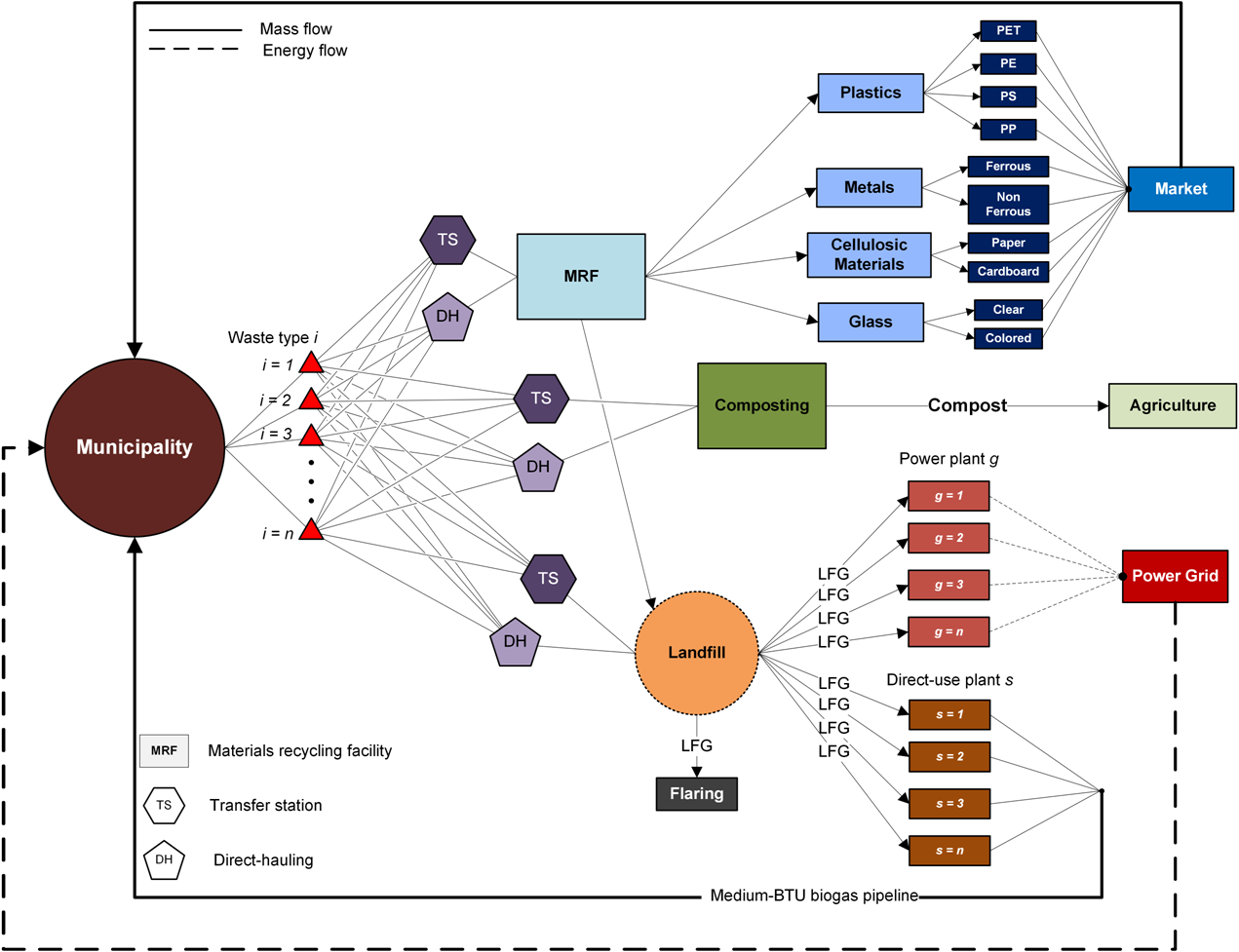
The objective is to develop optimization models for the sustainable management of water, the efficient consumption and production of energy, as well as for the waste minimization and reuse. Mathematical tools and theory include mixed integer programming, optimal control theory, stochastic programming and multiobjective optimization.
Development of Sustainability Theory
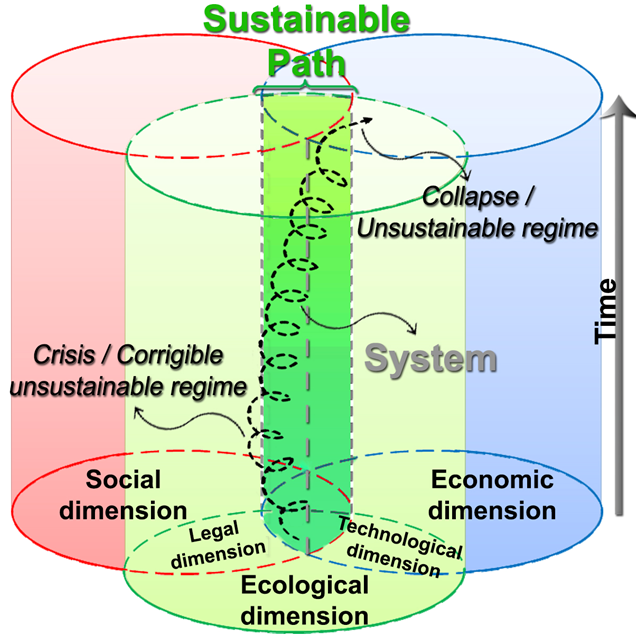
The study of human-ecosystems sustainability must be considered from an integrated point of view. Current developments on sustainability theory intend to integrate social and economic responses to environmental problems, including the simultaneous analysis of various human systems (finance, politics, production, energy, transportation, etc.). The goal is to support the understanding of the interactions between human activities and natural resources as well as the effect of economic and social issues on the sustainability of such systems. In the end, it is expected that such basic understanding will allow the development of systematic approaches that can be used to provide sustainable policy guidelines for complex integrated systems.
Fractional Calculus as a Tool for Modeling and Optimization in Biological Processes
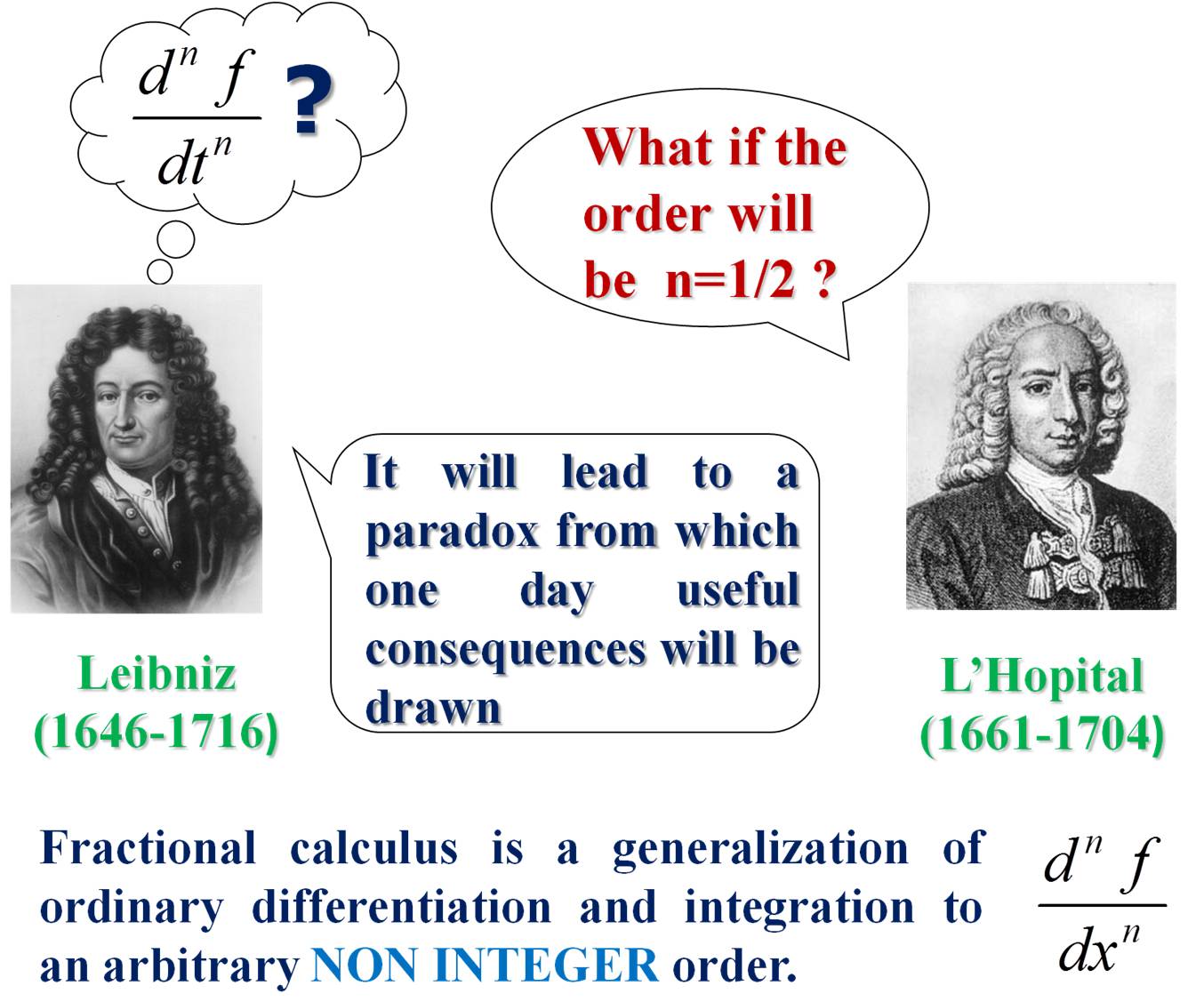
Fractional calculus, which introduces derivatives and integrals of fractional order, has been demonstrated as an efficient modeling tool in a large number of engineering applications; mostly due to the non-local property and the memory effect of fractional operators. In the general case, however, most of the large-scale dynamic systems will include a set of differential equations that involves both fractional as well as ordinary differential equations. Our goal in this area is concerned with the modeling, simulation and optimization of ordinary-fractional dynamic systems.
Awards and Honors
- Member of the Mexican National System of Researchers (SNII III) (1999-Present).
- Member of the Board of Directors of the University of Guanajuato
- Member of the Mexican Academy of Sciences (2022-Present)
- Member of the Technical Advisory Committee of the State of Guanajuato, Mexico (2007-2016).
- 2010 Distinguished Citizen Award. Salamanca, Guanajuato, Mexico.
- 2010 Distinguished Researcher Award. Instituto Tecnológico de Celaya, México.
- Recipient of a Fulbright-Garcia Robles Award as a visiting researcher at Carnegie Mellon University (Pittsburgh, PA, USA), 2006.
- Recipient of the “Adolfo López Mateos” Presidential Gold Medal,1994.
- J. M. Smith Award at the Instituto Tecnológico de Celaya, 1994.
- Graduated Cum Laude at the University of Guanajuato, 1992.
- Recipient of the “El Diario de México” Medal as one of “The Best Students of Mexico”, 1991.
Selected Publications
- Barajas-Villarruel, L. R., Flores-Guerrero, W.G., Rico-Ramirez, V., Castrejon-Gonzalez, E. O. (2024) A mathematical programming model for the supply chain of lithium in a macroscopic system: The case-study of Mexico, Chemical Engineering Research and Design, 211,1–8.
- Rangel-Osornio, C. A., Laguna-Martinez, M. G. Rico-Ramirez, V. (2023). Pollution Trading as a Mathematical Game”, Chemical Engineering Research and Design, 194, 410-424.
- Barajas-Villarruel, Rico-Ramirez, V., Castrejon-Gonzalez, E. O. (2024). Optimization Models for the Generation, Distribution and Transmission of Electricity in a Macroscopic System: Representation of Operational Regions as Energy Hubs, Chemical Engineering Research and Design, 187, 645-661, 2022.
- Rodríguez-González, P. T., R. Rico-Martínez, V. Rico-Ramírez .An Integrated Stochastic Economic-Ecological-Social Model with Stratified-Population (2018), Ecological Modelling, 368, 15–26.
- Munguía-López, A. C., V. Rico-Ramírez, J. M. Ponce-Ortega, Analysis of Carbon Policies in the Optimal Integration of Power Plants Involving Chemical Looping Combustion with Algal Cultivation Systems (2018), ACS Sustainable Chem. Eng., 6, 5248−5264.
- Garibay-Rodríguez, J., V. Rico-Ramírez, J. M. Ponce-Ortega, Mixed Integer Nonlinear Programming Model for Sustainable Water Management in Macroscopic Systems: Integrating Optimal Resource Management to the Synthesis of Distributed Treatment
- Systems (2017), ACS Sustainable Chem. Eng., 5, 2129-2145.
- Garibay‐Rodríguez, J., V. Rico‐Ramírez, J. M. Ponce‐Ortega, Optimal Water Management in Macroscopic Systems Under
- Economic Penalty Scenarios (2017), AIChE Journal, 3419-3441.
- Petriz-Prieto, M.A., V. Rico-Ramírez, G. González-Alatorre, F. I. Gómez-Castro, U. M. Diwekar, A Comparative Simulation Study of Power Generation Plants Involving Chemical Looping Combustion Systems (2016), Computers and Chemical Engineering, 84, 434-445.
- Toledo-Hernández, R., Rico-Ramírez, V., Iglesias-Silva, G.A., Diwekar, U.M., A Fractional Calculus Approach to the Dynamic Optimization of Biological Reactive Systems. Part I: Fractional Models for Biological Reactions (2014), Chemical Engineering Science, 117, 217-228.

